Mountainview Hospital: Clarity detected NCSE and Persistent Seizure Activity was Aborted
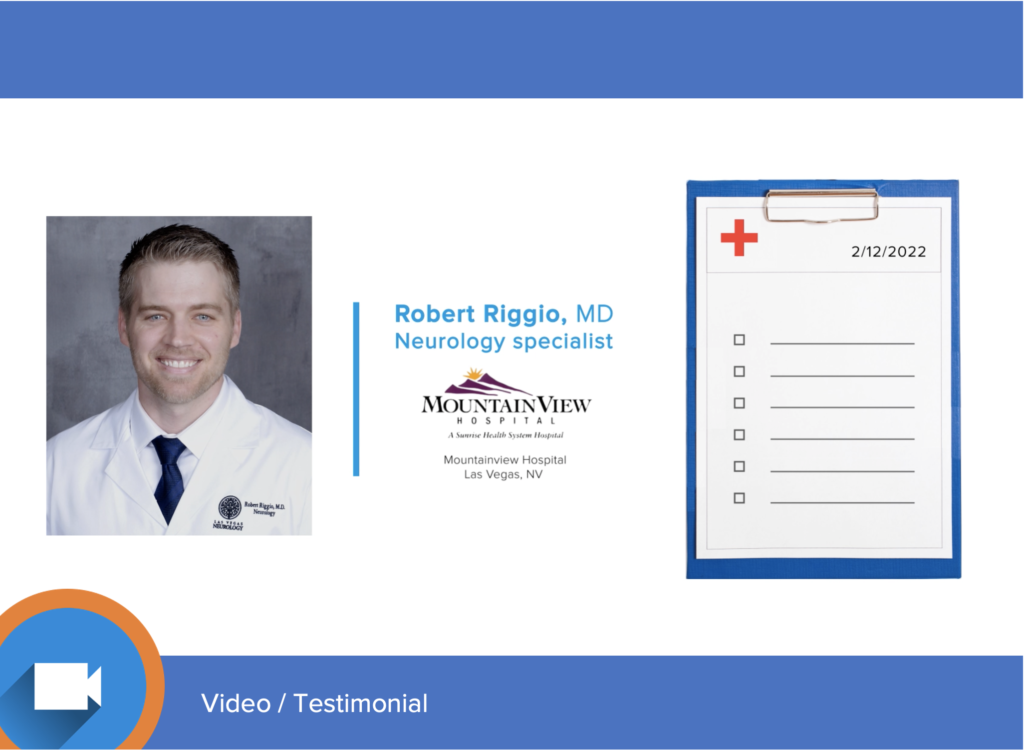
Ceribell Clarity detected NCSE and Persistent Seizure Activity was Aborted.
Subclinical early posttraumatic seizures detected by continuous EEG monitoring in a consecutive pediatric cohort
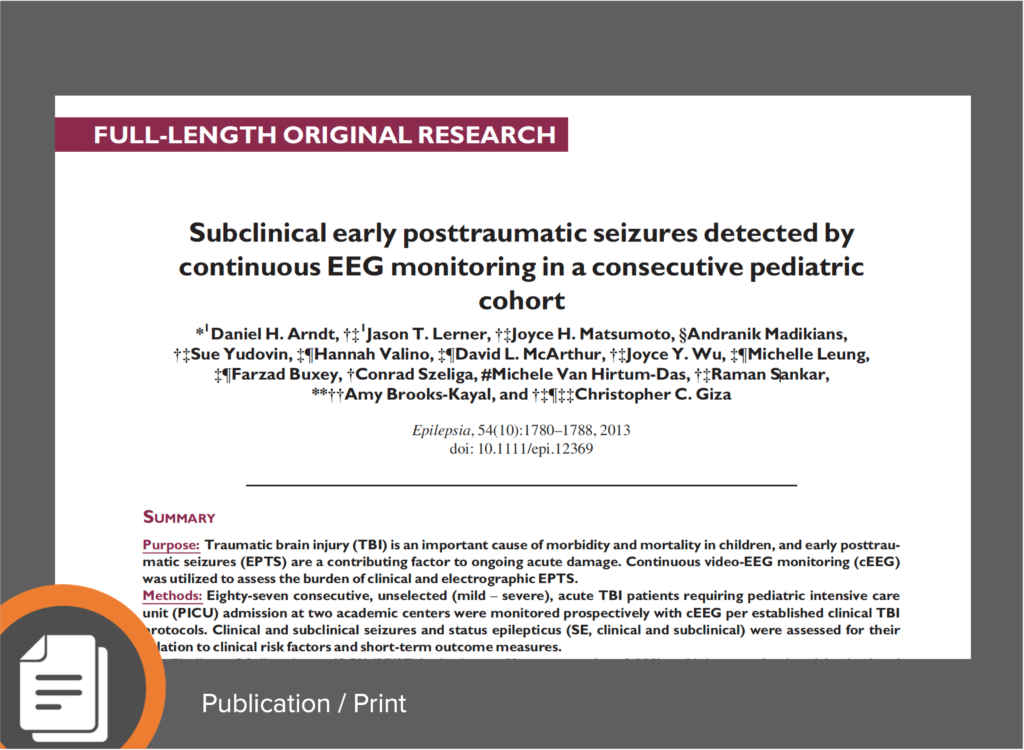
cEEG monitoring significantly improves detection of seizures/SE and is the only way to detect subclinical seizures/SE. cEEG may be indicated after pediatric TBI, particularly in younger children, AHT cases, and those with intraaxial blood on computerized tomography (CT).
Early Standard Electroencephalogram Abnormalities Predict Mortality in Septic Intensive Care Unit Patients
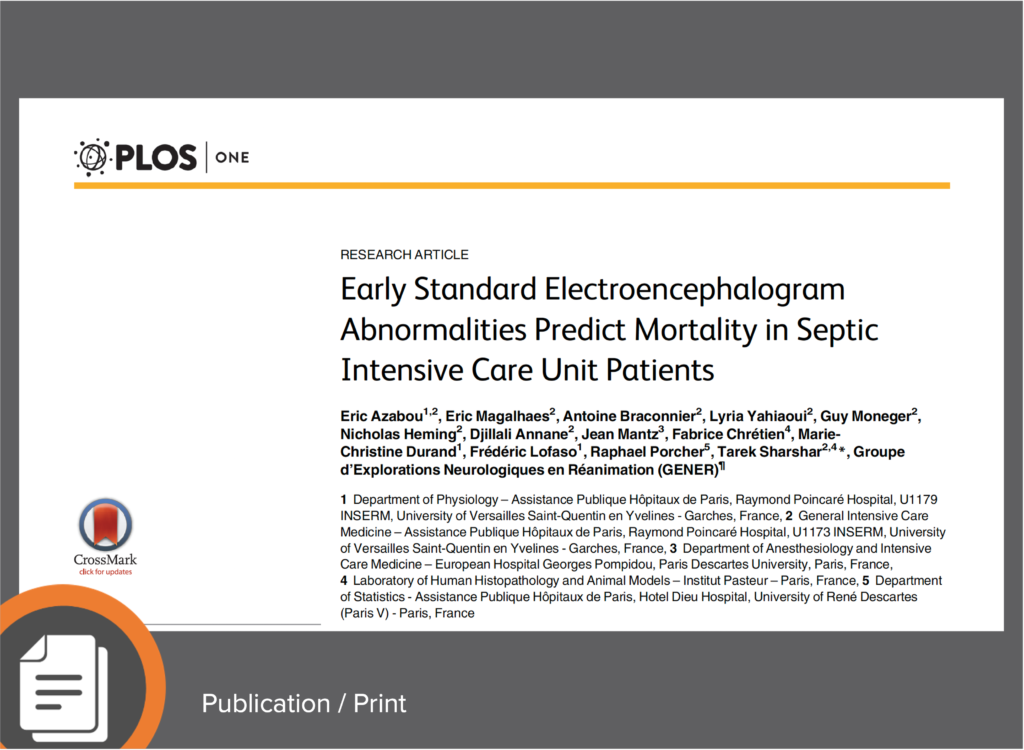
In this prospective cohort of 110 septic ICU patients, early standard EEG was significantly disturbed. Absence of EEG reactivity, a delta-predominant background, PDs, Synek grade 3 and Young grade > 1 at day 1 to 3 following admission were independent predictors of ICU mortality and were associated with occurence of delirium. ESZ and PDs, found […]
Incorporating abbreviated EEGs in the initial workup of patients who present to the emergency room with mental status changes of unknown etiology

AbEEGs can be successfully incorporated in the early evaluation of patients who present to the ER with mental status changes of unknown cause and provide useful information in this setting.
Burden of illness for super-refractory status epilepticus patients

SRSE is associated with high mortality and morbidity, which place a high burden on healthcare resources. Projections based upon the findings of this study suggest an estimated 25,821–41,959 cases of SRSE may occur in the US each year, but more in-depth studies are required.
Detection of electrographic seizures with continuous EEG monitoring in critically ill patients
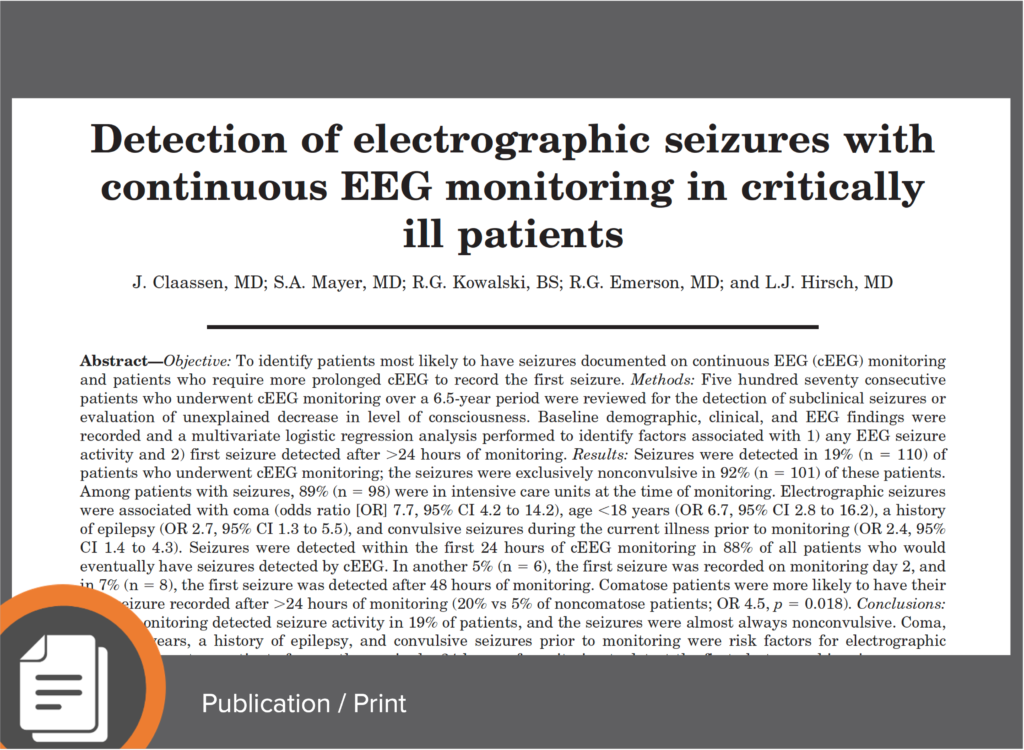
CEEG monitoring detected seizure activity in 19% of patients, and the seizures were almost always nonconvulsive. Coma, age 18 years, a history of epilepsy, and convulsive seizures prior to monitoring were risk factors for electrographic seizures. Comatose patients frequently required 24 hours of monitoring to detect the first electrographic seizure.
Guidelines for the Evaluation and Management of Status Epilepticus

Status epilepticus (SE) treatment strategies vary substantially from one institution to another due to the lack of data to support one treatment over another. To provide guidance for the acute treatment of SE in critically ill patients, the Neurocritical Care Society organized a writing committee to evaluate the literature and develop an evidence-based and expert […]
Improved access to rapid electroencephalography at a community hospital reduces inter-hospital transfers for suspected non-convulsive seizures
Patient transfers from community hospitals to larger hubs are often necessary to receive advanced care. These transfers are disruptive to families and costly for the patient and hospital. Diagnosing suspected non-convulsive seizures does not need to be a reason to transfer. New data published by Stanford University has shown that Ceribell EEG obviated the need […]
Associated Factors and Prognostic Implications of Non-convulsive Status Epilepticus in Ischemic Stroke Patients With Impaired Consciousness
NCSE is a common complication of ischemic stroke and is associated with both in-hospital mortality and dependency at the 3-month follow-up. Long-term video EEG monitoring of stroke patients is, therefore required, especially for those with severe consciousness disorders (stupor or coma) or cortical injury.
Continuous Electroencephalographic Monitoring in Critically Ill Patients With Central Nervous System Infections
In patients with central nervous system infections undergoing continuous electroencephalographic monitoring, ESz and/or PEDs were frequent, occurring in 48% of our cohort. More than half of the ESz had no clinical correlate. Both ESz and PEDs were independently associated with poor outcome. Additional studies are needed to determine whether prevention or treatment of these electrographic […]
EEG changes in intensive care patients diagnosed with COVID‑19: a prospective clinical study
The EEG data of 87 patients who were diagnosed with COVID-19 and were followed up in the intensive care unit were recorded and then analyzed. Abnormal EEG findings were detected in 93.1% of the patients. Epileptiform discharges were seen in 37.9% of the patients. Nonconvulsive status epilepticus (NCSE) was detected in 5.7% of the patients. […]
ED Webinar: Point-of-Care Brain Monitoring in Emergency Medicine
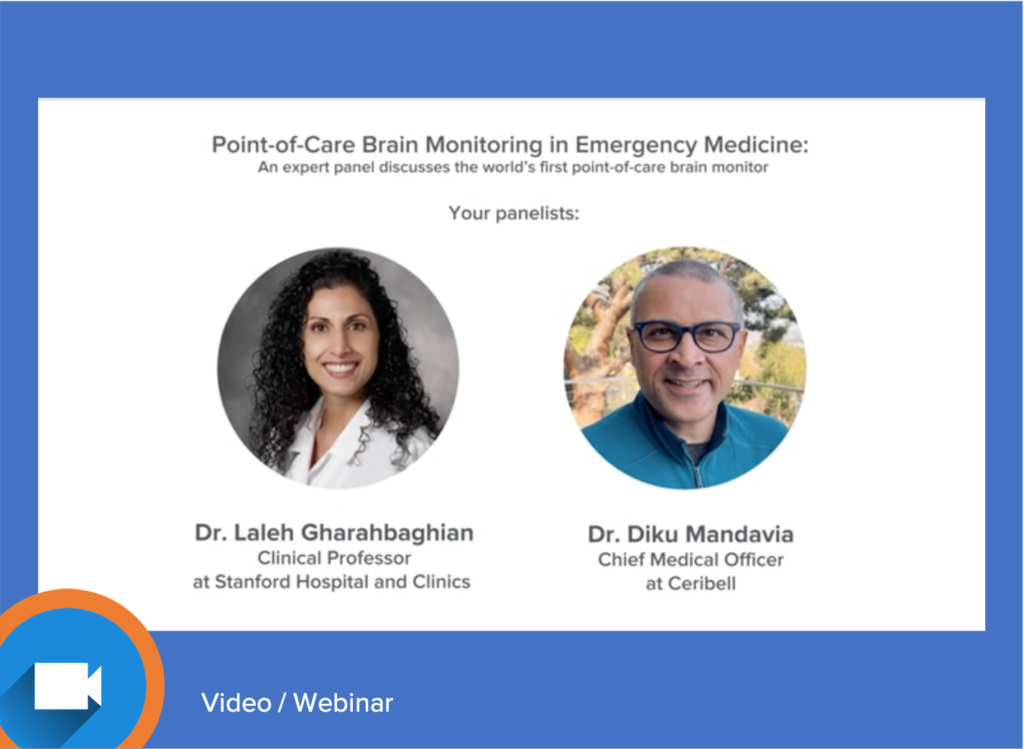
Webinar: Point-of-Care Brain Monitoring in Emergency Medicine In this webinar, Dr. Gharahbaghian and Dr. Mandavia will discuss brain monitoring in the emergency environment. The discussion will cover Stanford emergency care experience with Ceribell, including program implementation, real-world cases and impact. The discussion will be followed with live Q&A.