Improved access to rapid electroencephalography at a community hospital reduces inter-hospital transfers for suspected non-convulsive seizures
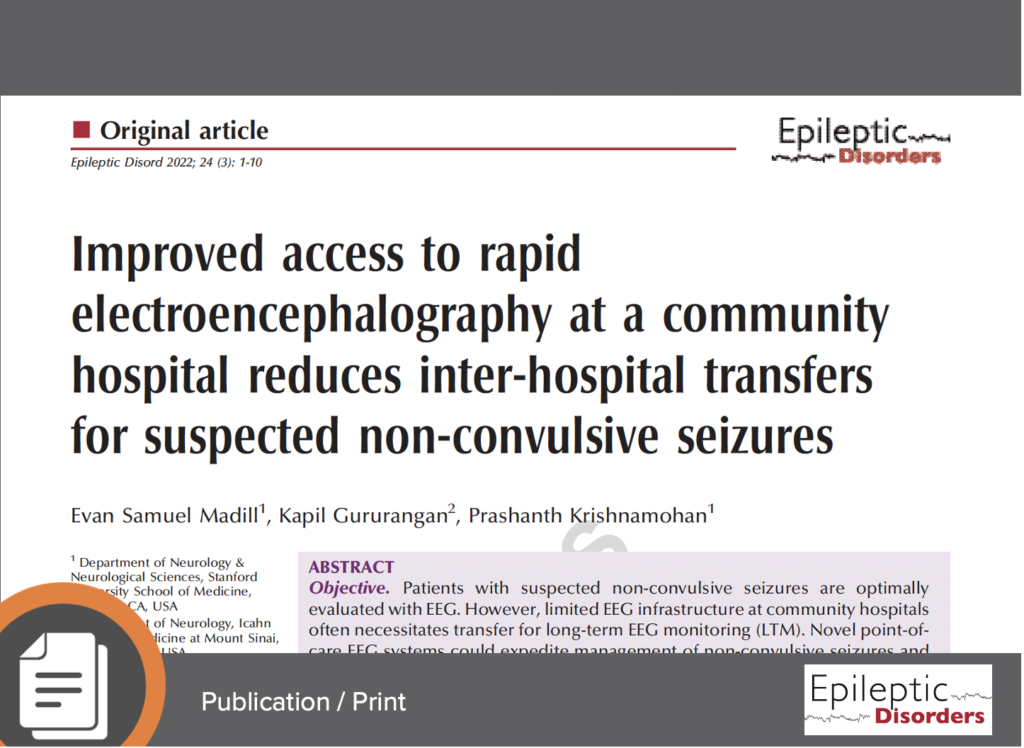
Patient transfers from community hospitals to larger hubs are often necessary to receive advanced care. These transfers are disruptive to families and costly for the patient and hospital. Diagnosing suspected non-convulsive seizures does not need to be a reason to transfer. New data published by Stanford University has shown that Ceribell EEG obviated the need […]
Associated Factors and Prognostic Implications of Non-convulsive Status Epilepticus in Ischemic Stroke Patients With Impaired Consciousness
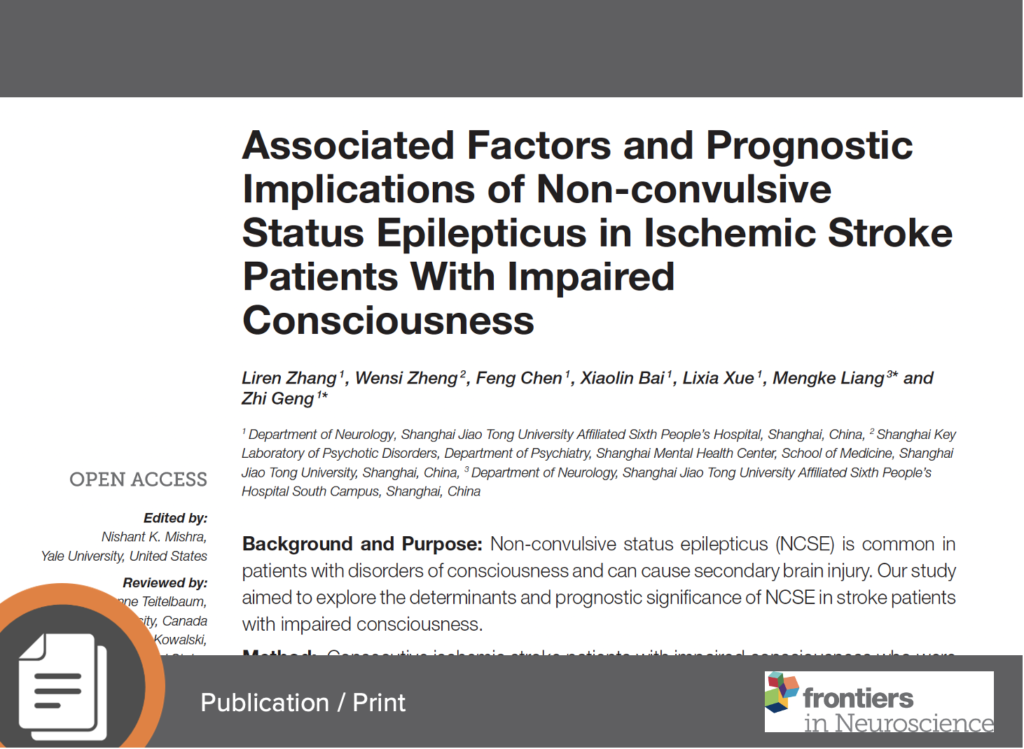
NCSE is a common complication of ischemic stroke and is associated with both in-hospital mortality and dependency at the 3-month follow-up. Long-term video EEG monitoring of stroke patients is, therefore required, especially for those with severe consciousness disorders (stupor or coma) or cortical injury.
Continuous Electroencephalographic Monitoring in Critically Ill Patients With Central Nervous System Infections
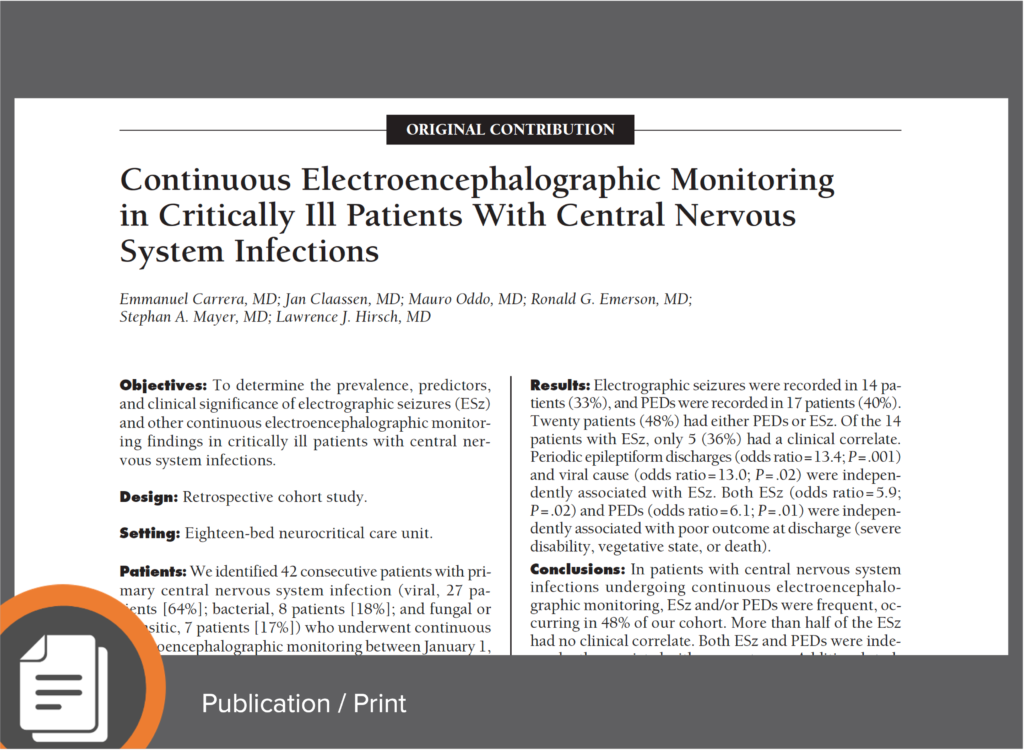
In patients with central nervous system infections undergoing continuous electroencephalographic monitoring, ESz and/or PEDs were frequent, occurring in 48% of our cohort. More than half of the ESz had no clinical correlate. Both ESz and PEDs were independently associated with poor outcome. Additional studies are needed to determine whether prevention or treatment of these electrographic […]
EEG changes in intensive care patients diagnosed with COVID‑19: a prospective clinical study
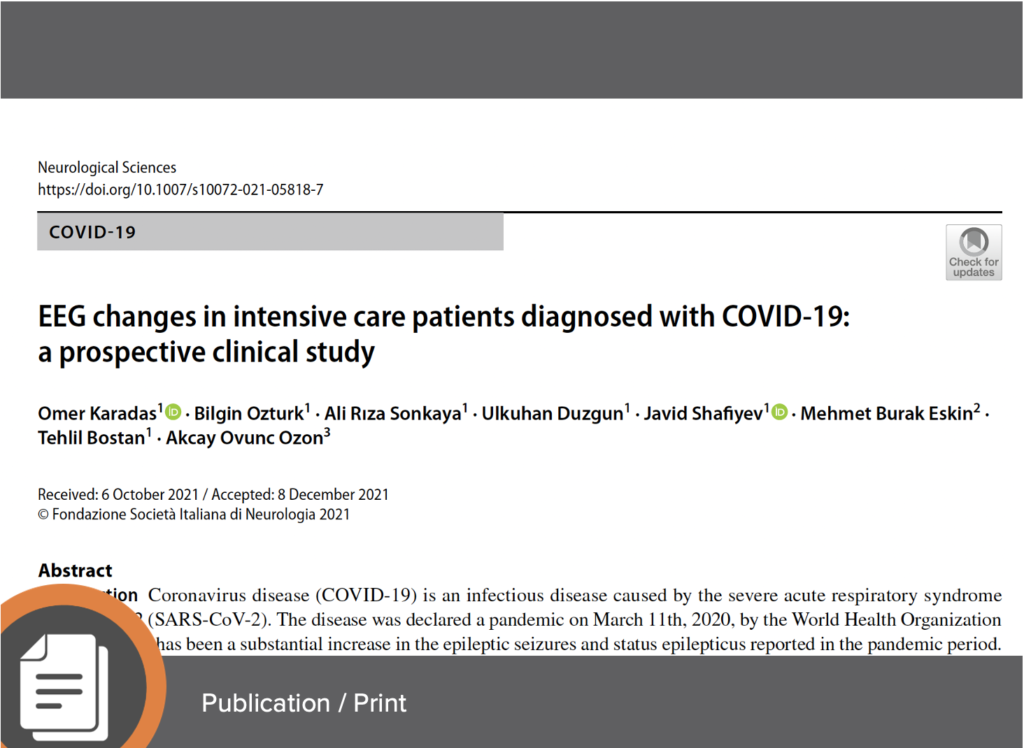
The EEG data of 87 patients who were diagnosed with COVID-19 and were followed up in the intensive care unit were recorded and then analyzed. Abnormal EEG findings were detected in 93.1% of the patients. Epileptiform discharges were seen in 37.9% of the patients. Nonconvulsive status epilepticus (NCSE) was detected in 5.7% of the patients. […]
Evaluating the Utility of Rapid Response EEG in Emergency Care
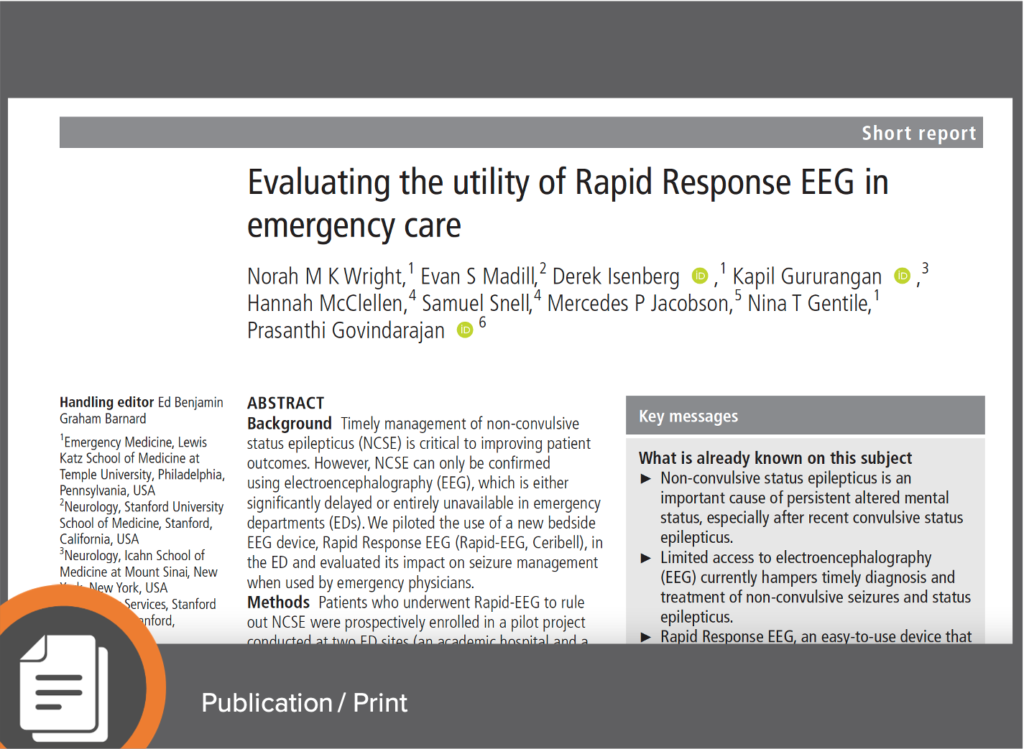
Rapid- EEG was successfully deployed by emergency physicians at academic and community hospitals, and the device changed management in a majority of cases. Widespread adoption of Rapid- EEG may lead to earlier diagnosis of NCSE, reduced unnecessary treatment and expedited disposition of seizure mimics.
2020 AHA guidelines recommend prompt EEG after cardiac arrest. With Ceribell, any bedside clinician can set-up EEG and triage in minutes.
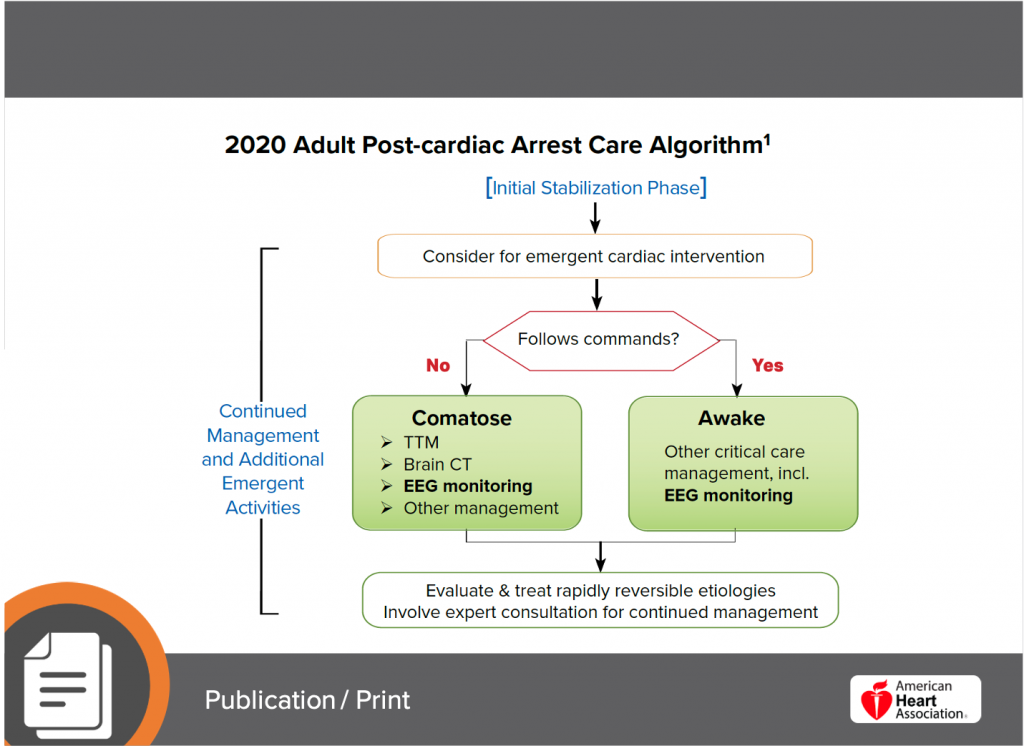
“Many cardiac arrest patients who survive the initial event will eventually die because of withdrawal of life-sustaining treatment in the setting of neurological injury… Thus, much of post-arrest care focuses on mitigating injury to the brain.” -Circulation. 2020;142(suppl 2):S366–S468. DOI: 10.1161/CIR.0000000000000916 Prompt EEG is recommended for post-cardiac arrest monitoring and prognostication. Download the guidelines here.
Rapid EEG for Cardiac Arrest Patients Manuscript: Reduced EEG Montage Has A High Accuracy In the Post Cardiac Arrest Setting
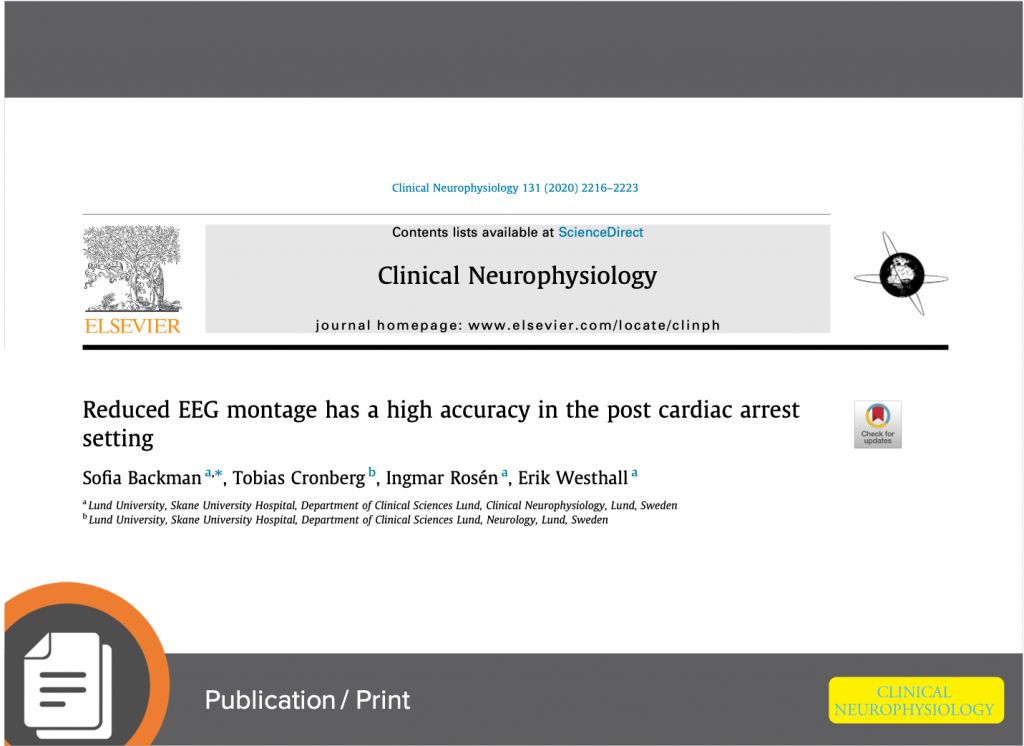
Reduced EEG montage like that used by Ceribell Rapid EEG has a high accuracy for seizure triage in the post cardiac arrest setting A reduced electrode montage may be used for post cardiac arrest EEG monitoring Background patterns were almost perfectly assessed with a reduced montage Discharge patterns were identified with high accuracy
Circumferential Montage Manuscript: Limited-Montage EEG as a Tool for the Detection of Nonconvulsive Seizures
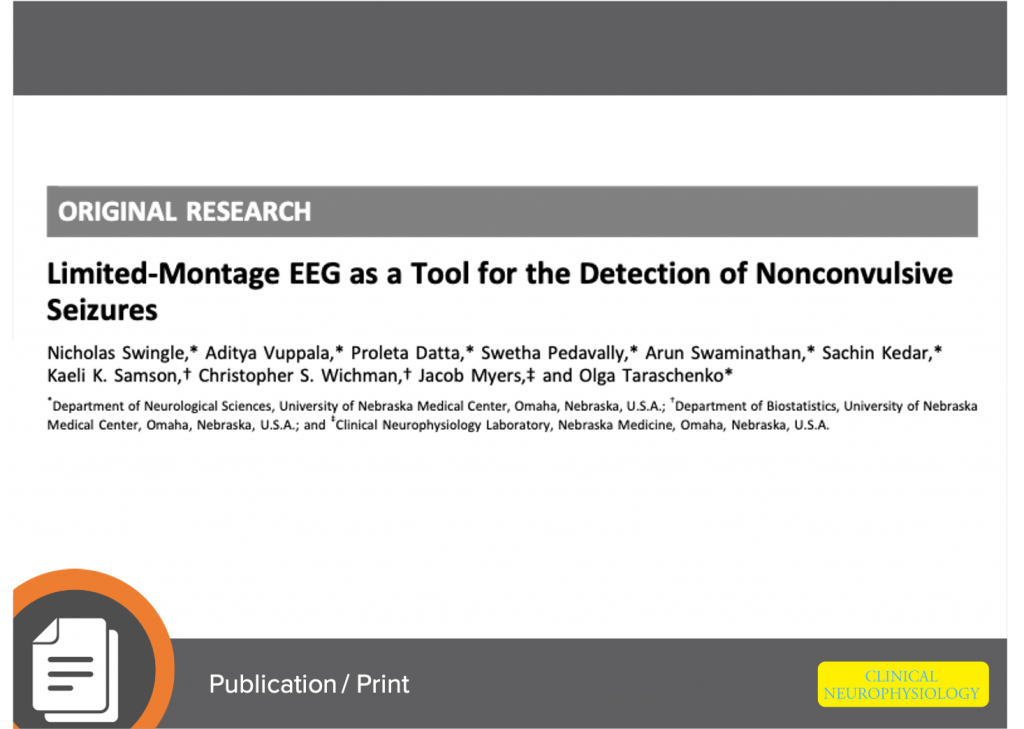
Limited-Montage EEG may be a valuable tool for the detection of nonconvulsive seizures Nonconvulsive seizures were detected with high accuracy using the limited electrode array configuration in hatband (circumferential Ceribell) montage. These findings suggest that in some patients with nonconvulsive seizures, limited-montage EEG may allow to identification of ictal and slow patterns.
Brain Stethoscope Study Manuscript: Rapid Evaluation Of Seizures In the ICU
The Ceribell EEG System offers rapid EEG acquisition and conversion of EEG signals to sound (sonification) using a proprietary algorithm Ceribell EEG System (1) reliably provided rapid emergent EEG data, (2) accurately identified subclinicial seizures, (3) resulted in fewer non-seizing patients being treated, and (4) was easy to use by clinicians not trained to place […]
Brain Stethoscope Study Manuscript: Detecting Silent Seizures By Their Sound
Individuals without any prior EEG training can accurately determine whether the EEG represents seizures or nonseizure conditions Individuals without EEG training can detect ongoing seizures or seizure-like rhythmic periodic patterns by listening to sonified EEG Nonexperts listening to single-channel sonified EEGs detected seizures with remarkable sensitivity (students, 98%±5%; nurses, 95%±14%) compared to experts or nonexperts […]
Circumferential Montage Manuscript: Diagnostic Utility of 8-channel EEG For Detecting Generalized Seizure
The Ceribell circumferential montage EEG can be used in emergency situations to detect gross abnormalities Full and reduced EEG demonstrated similar accuracy when read by neurologists (fm-EEG: 95%, rm-EEG: 95%, p = 0.29) Resident physicians judged with similar accuracy (fm-EEG: 80%, rm-EEG: 80%, p = 0.05), Medical student accuracy was comparable (fm-EEG: 60%, rm-EEG: 57%, p = 0.68)
Circumferential Montage Manuscript: Midline and Parasagittal Seizures Are Rare In Adult Patients
Combining data from 16 studies, the prevalence of midline or parasagittal abnormalities was 0.71% (1,211 of 169,510) The study clearly confirms that focal midline or parasagittal seizure are rare. In a cohort of 300 patients, 17 were found to have seizure activity; of these, only two were documented to have focal midline or parasagittal seizures […]