Incorporating abbreviated EEGs in the initial workup of patients who present to the emergency room with mental status changes of unknown etiology

AbEEGs can be successfully incorporated in the early evaluation of patients who present to the ER with mental status changes of unknown cause and provide useful information in this setting.
Burden of illness for super-refractory status epilepticus patients

SRSE is associated with high mortality and morbidity, which place a high burden on healthcare resources. Projections based upon the findings of this study suggest an estimated 25,821–41,959 cases of SRSE may occur in the US each year, but more in-depth studies are required.
Detection of electrographic seizures with continuous EEG monitoring in critically ill patients
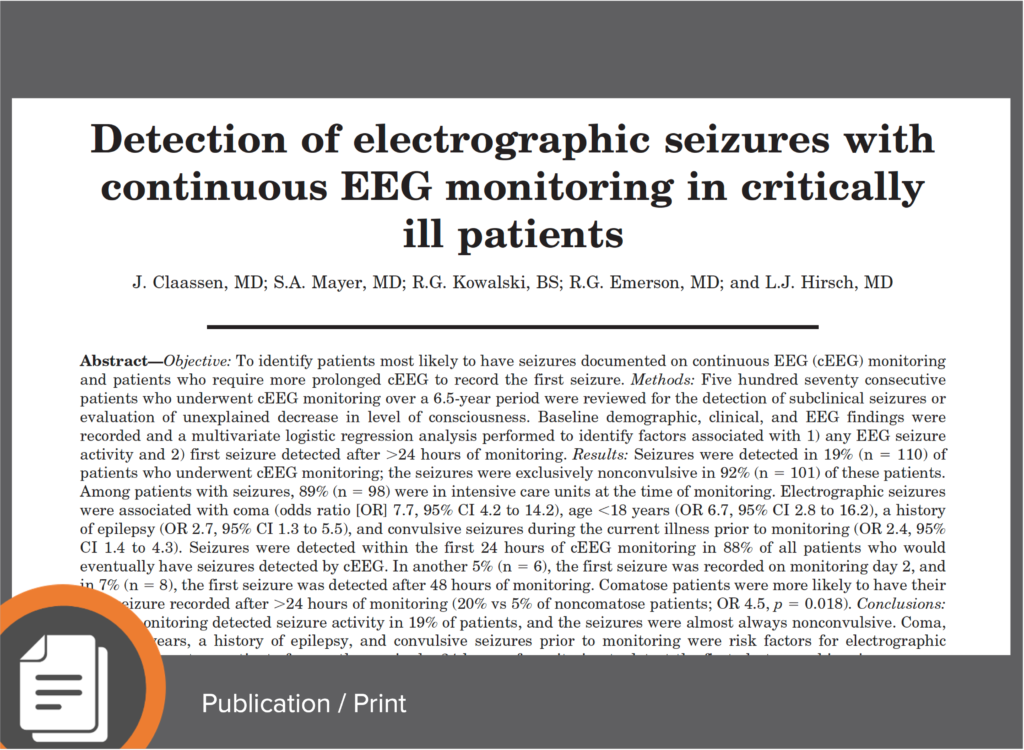
CEEG monitoring detected seizure activity in 19% of patients, and the seizures were almost always nonconvulsive. Coma, age 18 years, a history of epilepsy, and convulsive seizures prior to monitoring were risk factors for electrographic seizures. Comatose patients frequently required 24 hours of monitoring to detect the first electrographic seizure.
Guidelines for the Evaluation and Management of Status Epilepticus

Status epilepticus (SE) treatment strategies vary substantially from one institution to another due to the lack of data to support one treatment over another. To provide guidance for the acute treatment of SE in critically ill patients, the Neurocritical Care Society organized a writing committee to evaluate the literature and develop an evidence-based and expert […]
Improved access to rapid electroencephalography at a community hospital reduces inter-hospital transfers for suspected non-convulsive seizures
Patient transfers from community hospitals to larger hubs are often necessary to receive advanced care. These transfers are disruptive to families and costly for the patient and hospital. Diagnosing suspected non-convulsive seizures does not need to be a reason to transfer. New data published by Stanford University has shown that Ceribell EEG obviated the need […]
Continuous Electroencephalographic Monitoring in Critically Ill Patients With Central Nervous System Infections
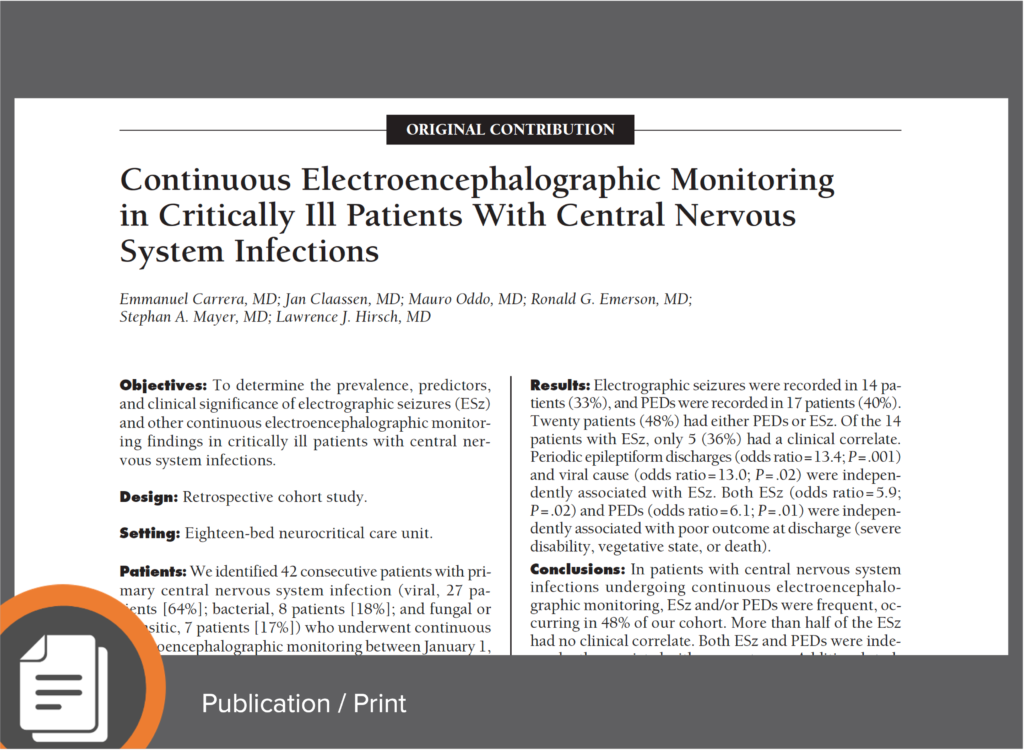
In patients with central nervous system infections undergoing continuous electroencephalographic monitoring, ESz and/or PEDs were frequent, occurring in 48% of our cohort. More than half of the ESz had no clinical correlate. Both ESz and PEDs were independently associated with poor outcome. Additional studies are needed to determine whether prevention or treatment of these electrographic […]
Ceribell EEG for Risk Stratification
Dr. Stephan A. Mayer presents on Cardiac Arrest and Emergency EEG
Educational Webinar: AHA Post-Cardiac Arrest Class 1 Guidelines

Dr. Jake Adams presented on: – Patient risk for seizure after cardiac arrest – The implications of prolonged seizure/status in this patient population – Implementing the guidelines for prompt EEG in a community setting – Case review and impact Jake Adams, DO National Tele-ICU Director – Sound Critical Care Northern California Dr. Jake Adams, is […]
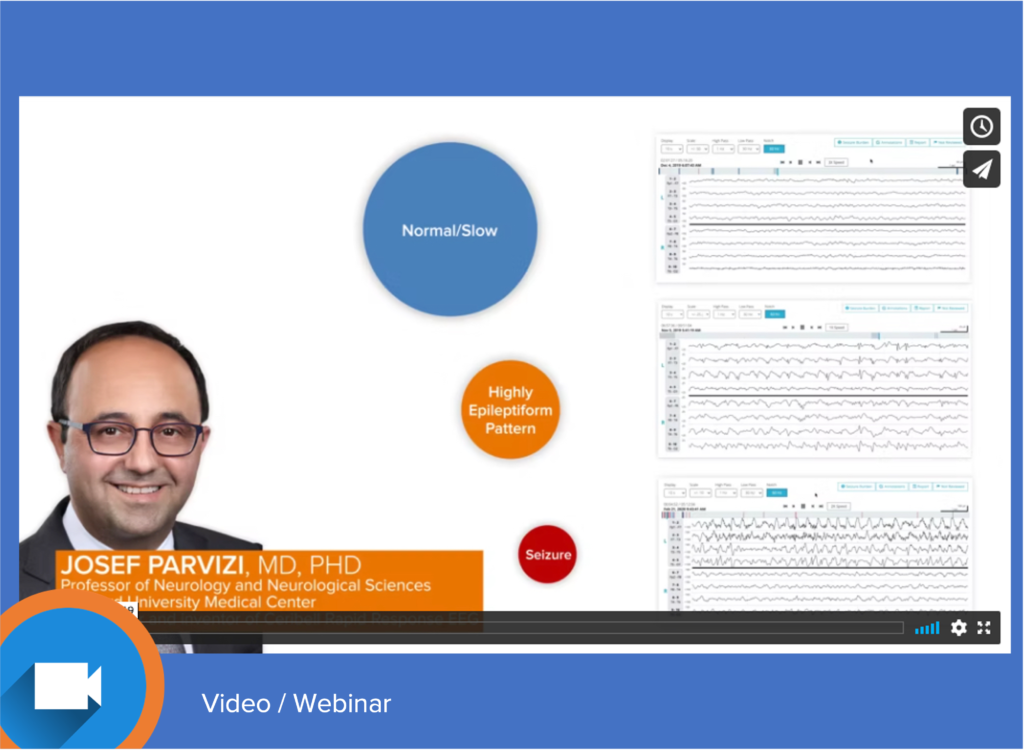
Skill-building Webinar: Reading Ceribell EEG

Dr. Josef Parvizi and Dr. John Stern discuss: The basics of EEG Common artifacts and EEG characteristics EEG examples on Ceribell Real-world cases with Ceribell EEG (recorded at the 3.25 AM session) Dr. Josef Parvizi, MD, PhD is a Professor of Neurology and Neurological Sciences at Stanford University Medical Center. He has extensively published original scientific works […]
An Interdisciplinary Approach to Managing Nonconvulsive Status Epilepticus
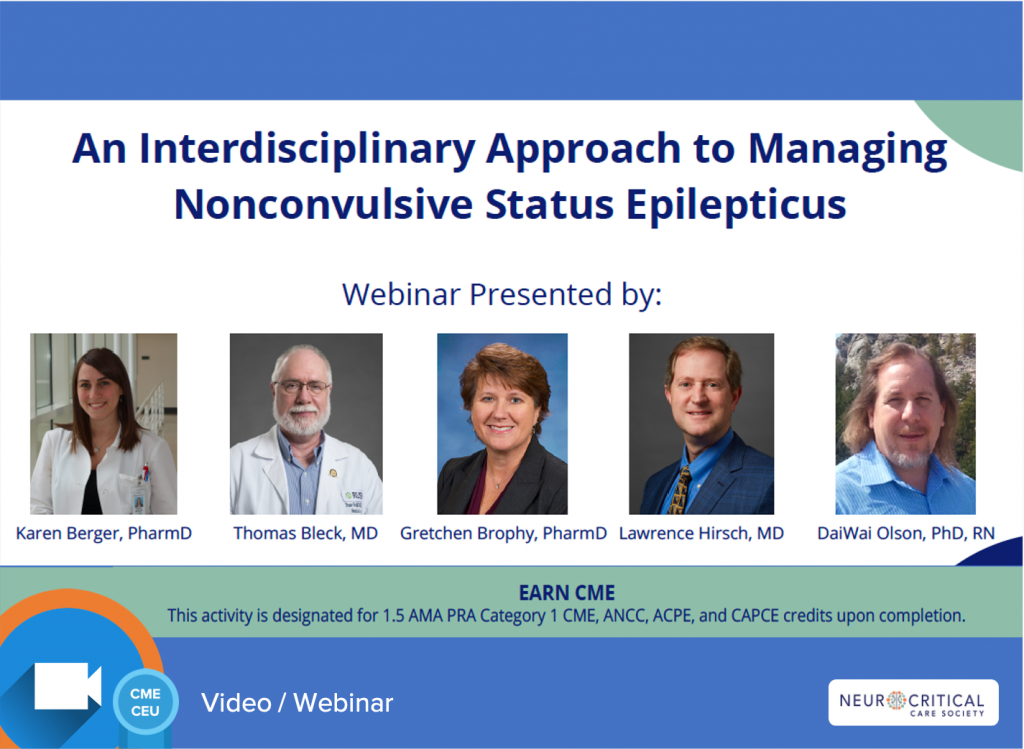
The Neurocritical Care Society (NCS) presents a FREE CME Source: An Interdisciplinary Approach to Managing Nonconvulsive Status Epilepticus Speakers: Thomas Bleck, DaiWai Olson, Lawrence Hirsch, Karen Berger Moderator: Gretchen Brophy Please access the CME course via this link: https://www.pathlms.com/ncs-ondemand/courses/1815/video_presentations/173862?ut%E2%80%A6%20 The webinar covers the evolution of EEG monitoring with respect to changes in delegation of authority […]
DECIDE Study Assessing The Impact of Ceribell EEG – Manuscript Review With Dr. Paul Vespa

Dr. Paul Vespa, Assistant Dean of Critical Care Medicine, Research and David Geffen School of Medicine, UCLA and Gary L. Brinderson Family Chair in Neurocritical Care at David Geffen School of Medicine, UCLA and co-author of the DECIDE paper presents the study. Ceribell™ Rapid Response EEG was demonstrated to significantly improve clinical accuracy and confidence […]
Clarity AI For 24/7 EEG Monitoring Alert – Manuscript Review With Dr. Josef Parvizi
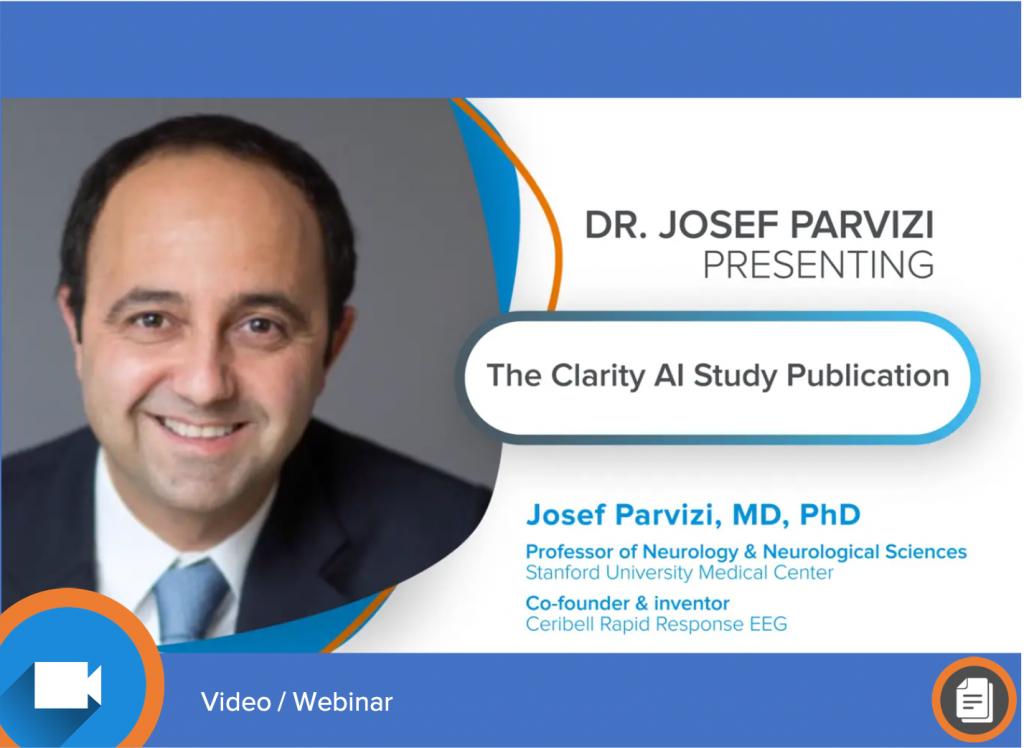
Dr. Josef Parvizi, Professor of Neurology at Stanford and co-author of the Ceribell Clarity AI paper presents the study. Of the 179 EEG recordings in which Claritγ detected no seizures, [Clarity had a] negative predictive value of 99%. Individual expert raters displayed variability in both sensitivity (range 20–89%) and specificity (range 94–99%). The sensitivity for […]