Role of Epileptic Activity in Older Adults With Delirium, a Prospective Continuous EEG Study
CONFUSION/DELIRIUM IN ELDERLY: NCSE is more common in elderly patients; EEG should be considered for elderly patients experiencing acute confusional state or delirium, even in the presence of a presumed symptomatic cause NCSE was found in 6 (12%) patients and interictal discharges in 15 (30%). There was no difference in the prevalence of epileptic activity […]
Altered Mental Status: Current Evidence-based Recommendations for Prehospital Care
EMERGENCY DEPT: Underutilization of EEG and underdiagnosis of NCSE in the emergency department
Cefepime-Induced Neurotoxicity: A Systematic Review
CAFEPIME: NCSE is common in patients who have been given Cefepime; EEG should be considered for those experiencing Altered Mental Status Cefepime-induced neurotoxicity is challenging to recognize in the critically ill due to widely varying symptoms that are common in ICU patients. This adverse reaction can occur despite appropriate dosing, usually resolves with drug interruption, […]
Prognostic Significance of Clinical Seizures After Cardiac Arrest And Target Temperature Management
CARDIAC ARREST: Seizures and NCSE are common in post-cardiac arrest patients and are correlated with poor outcomes; time to normal is correlated with good neurologic outcomes.
Continuous Amplitude-integrated Electroencephalographic Monitoring Is a Useful Prognostic Tool for Hypothermia-treated Cardiac Arrest Patients
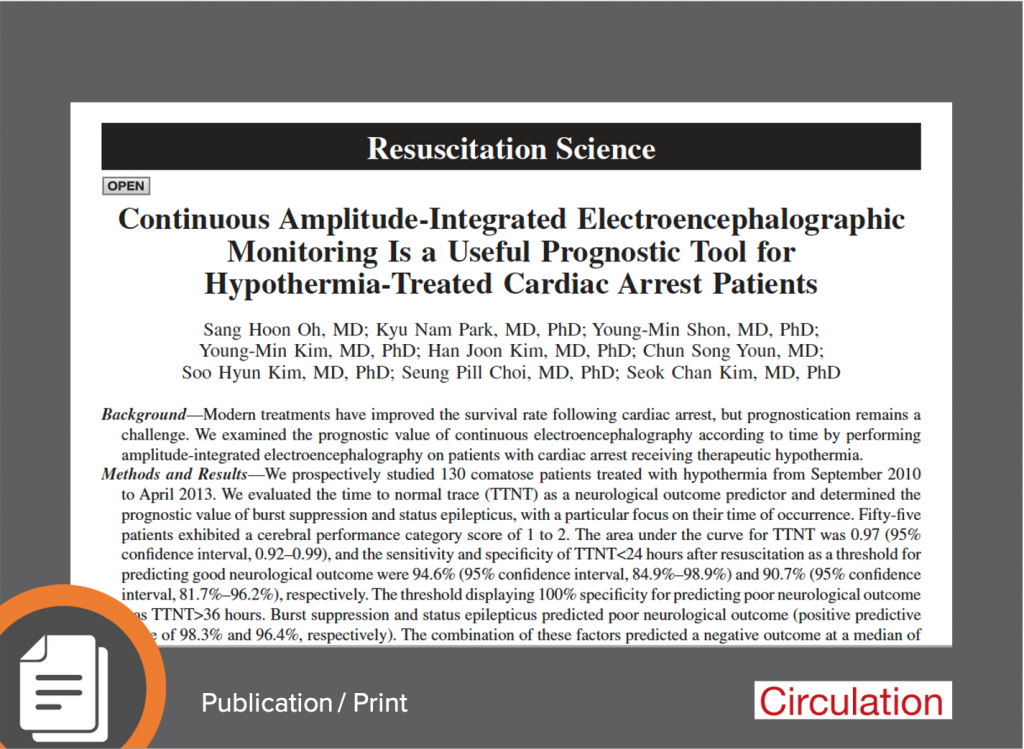
CARDIAC ARREST: Seizures and NCSE are common in post-cardiac arrest patients and are correlated with poor outcomes; time to normal is correlated with good neurologic outcomes
Acute Brain Failure in Severe Sepsis: A Prospective Study in the Medical Intensive Care Unit Utilizing Continuous EEG Monitoring
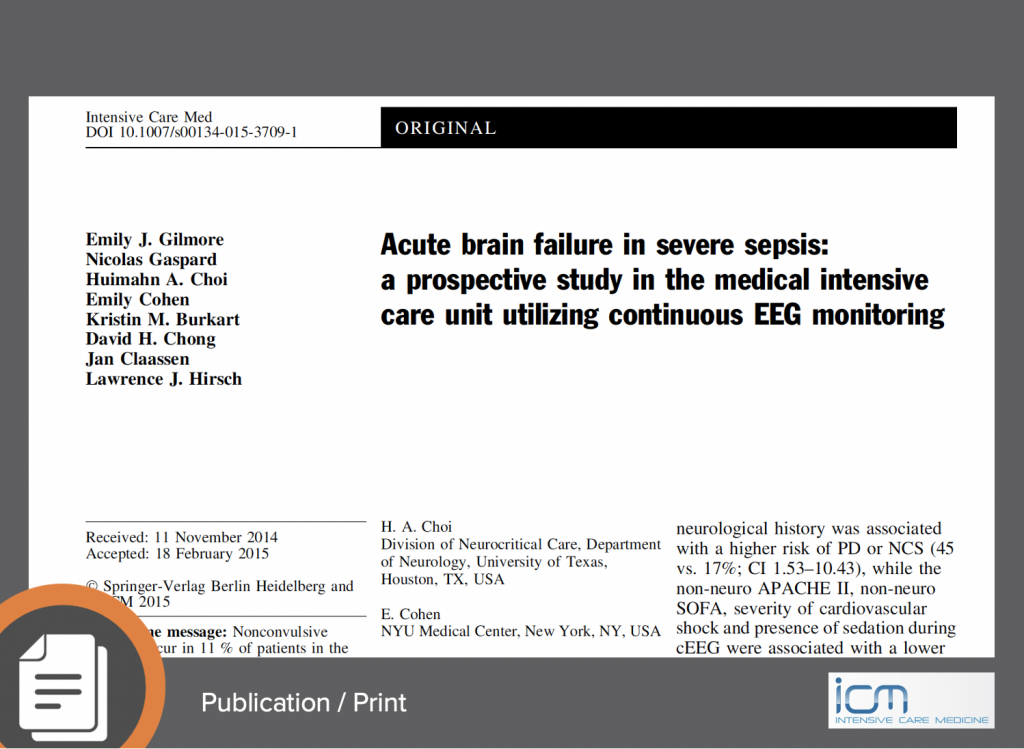
SEPSIS: NCS and periodic discharge are common in septic patients; EEG may be considered for prompt diagnosis NCS and PD are common in patients with severe sepsis and altered mental status. Lack of EEG reactivity was more frequent in patients on continuous sedation and was associated with mortality up to 1 year after discharge.
Non-Convulsive Seizures in the Encephalopathic Critically Ill Cancer Patient Does Not Necessarily Portend a Poor Prognosis
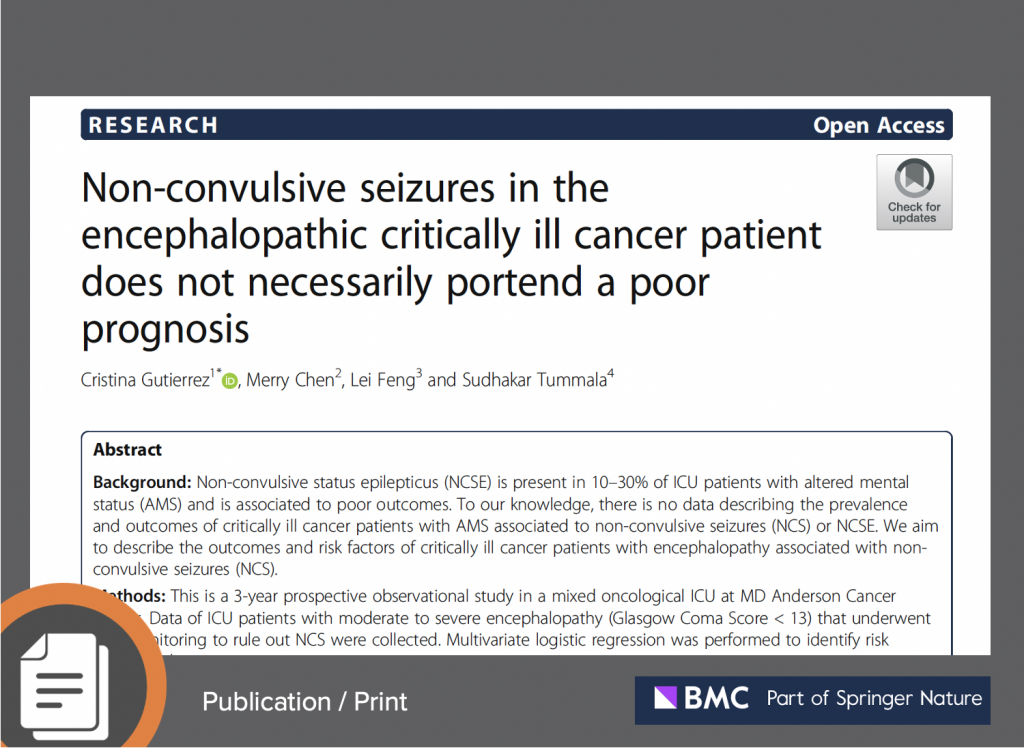
CANCER: NCSE in critically ill cancer patients should be promptly diagnosed and treated NCS in critically ill cancer patients is associated with abnormalities on brain imaging and lower prevalence of organ failure. Diagnosis and treatment of NCS should be a priority in encephalopathic cancer patients, as they can have lower mortality than non-seizing patients. Opposite […]
EEG Patterns Compatible with Nonconvulsive Status Epilepticus Are Common in Elderly Patients with Delirium: A Prospective Study with Continuous EEG Monitoring
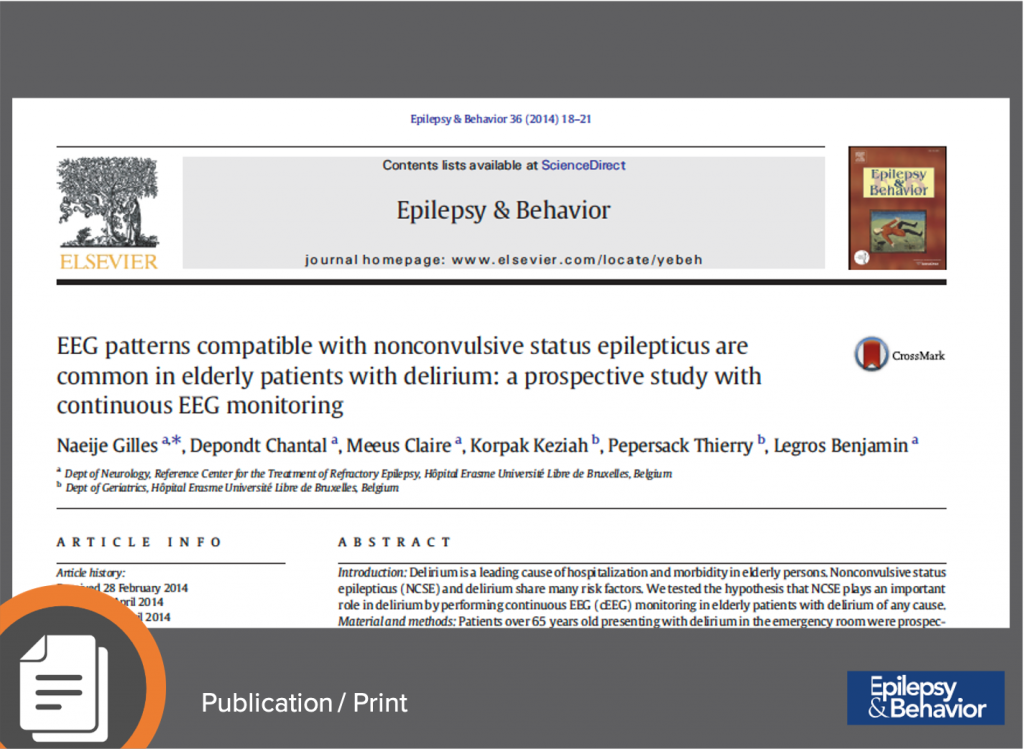
CONFUSION/DELIRIUM IN ELDERLY: NCSE is more common in elderly patients; EEG should be considered for elderly patients experiencing acute confusional state or delirium, even in the presence of a presumed symptomatic cause
The Incidence of Seizures in Patients Undergoing Therapeutic Hypothermia After Resuscitation From Cardiac Arrest
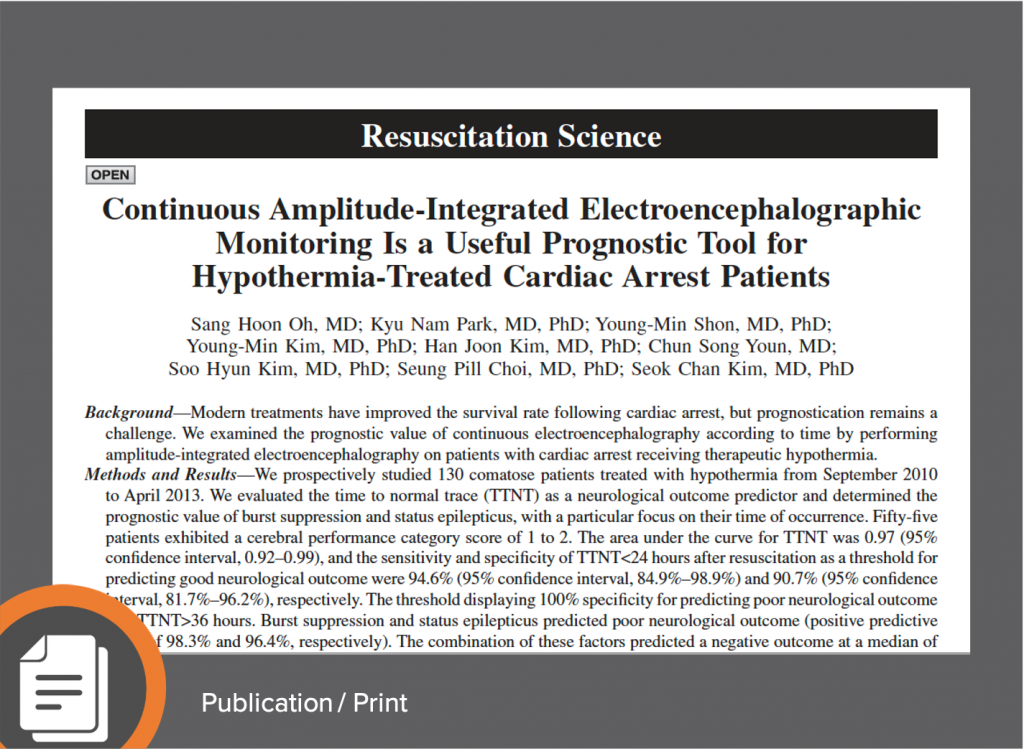
CARDIAC ARREST: Seizures and NCSE are common in post-cardiac arrest patients and are correlated with poor outcomes; time to normal is correlated with good neurologic outcomes
Prevalence of Non-Convulsive Seizure and Other Electroencephalographic Abnormalities in ED Patients with Altered Mental Status
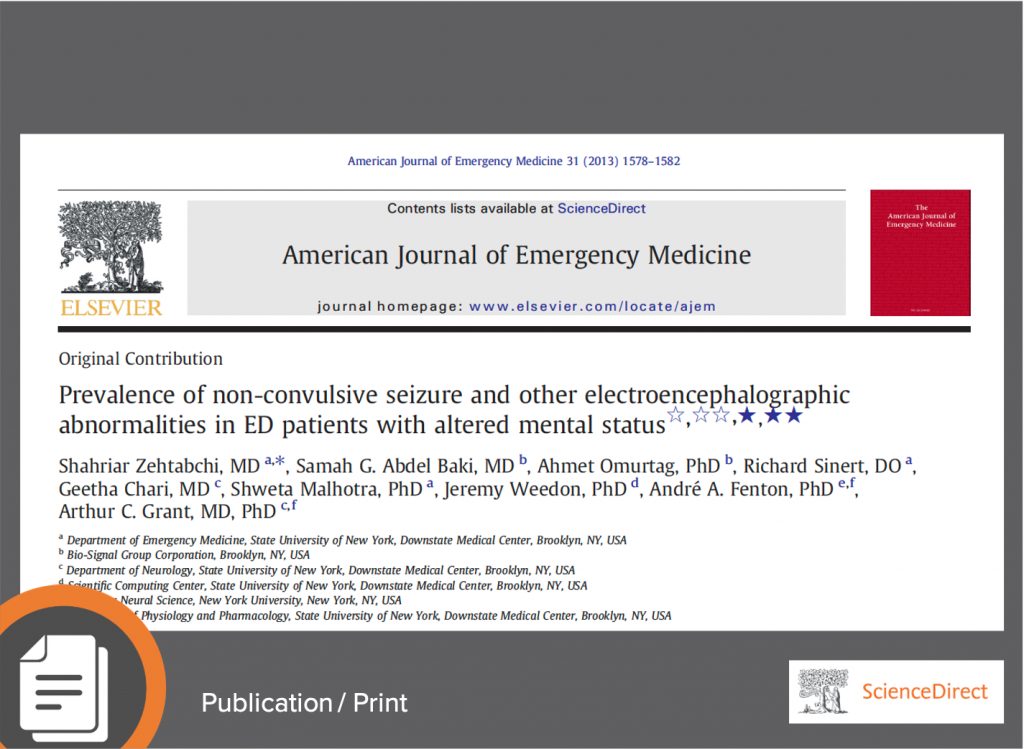
EMERGENCY DEPT: Underutilization of EEG and underdiagnosis of NCSE in the emergency department
Electrographic Seizures in Pediatric ICU Patients: Cohort Study of Risk Factors and Mortality
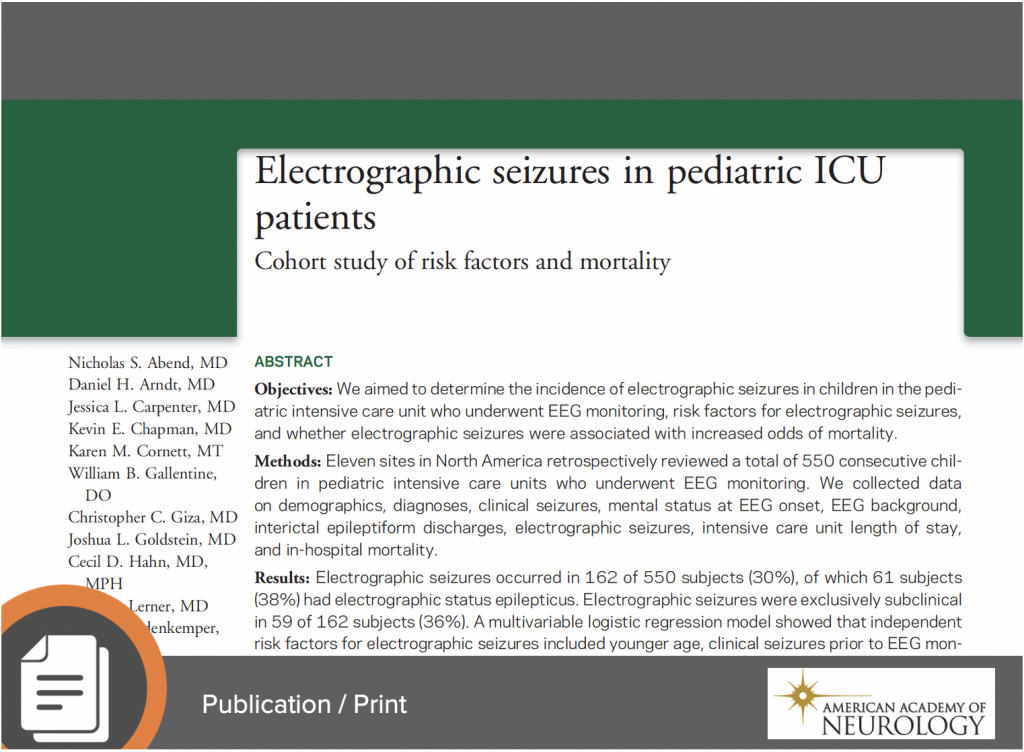
PEDIATRIC ICU: Among children in the PICU, status epilepticus is common and is associated with higher mortality Electrographic seizures occurred in 162 of 550 subjects (30%), of which 61 subjects (38%) had electrographic status epilepticus. Electrographic seizures are common among children in the pediatric intensive care unit, particularly those with specific risk factors. Electrographic status […]
Nonconvulsive Status Epilepticus: Value of a Benzodiazepine Trial for Predicting Outcomes
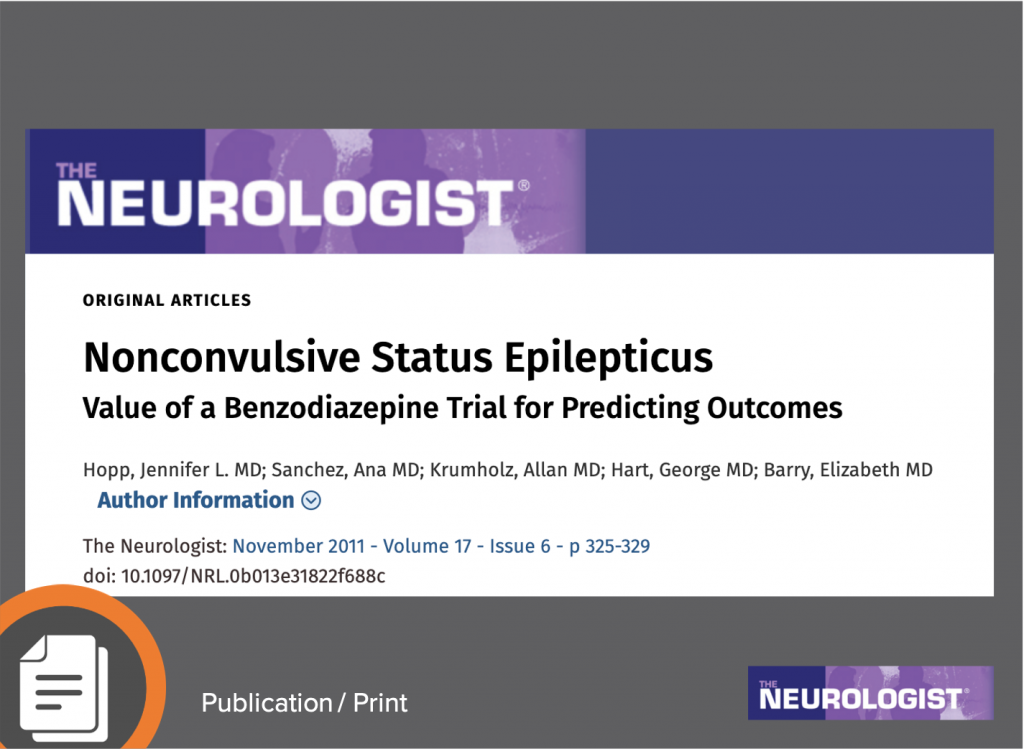
AED OPTIMIZATION: For individuals with NCSE, an EEG response to acute AED administration may aid in predicting outcomes and stratifying those more likely to benefit from aggressive treatment.